

How to Get More Done – SAHM Productivity Tips
Last Updated on November 12, 2025 by Kayla Ruetten

Cleaning spills, changing diapers, kissing owies, laundry piles, sibling disputes, stepping on Legos, homeschooling, sick children, pouring another coffee to get through the day… SAHMs can sometimes feel overwhelmed and a victim to inefficiency, despite “doing” all day. Follow these “How to Get More Done – SAHM Productivity Tips” to help you get organized and feel more in control of your day.
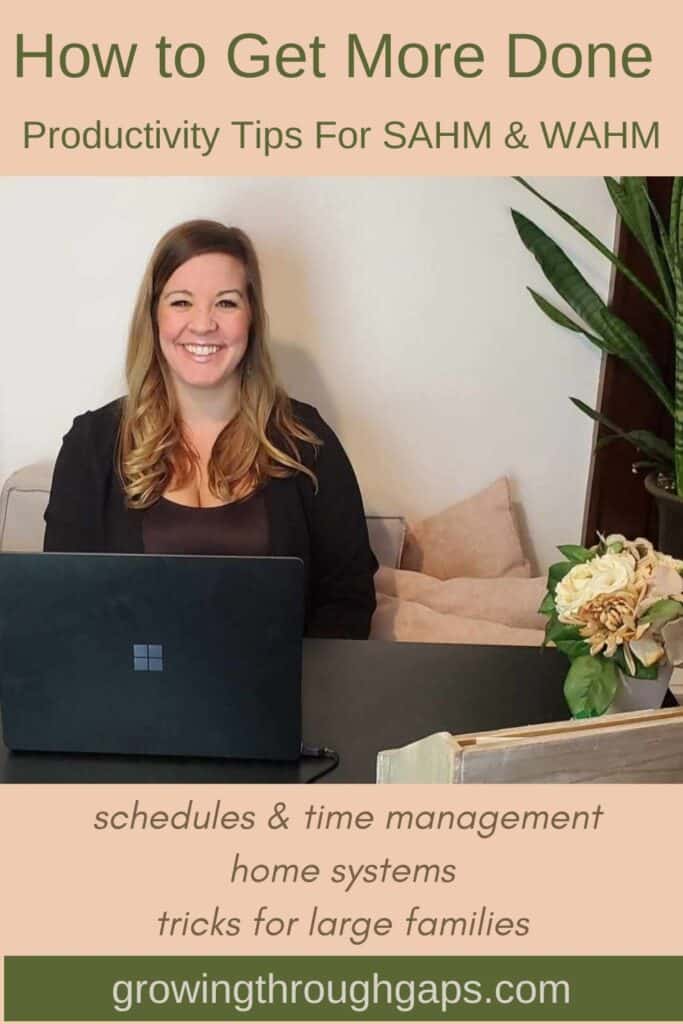
What Does SAHM Mean?
SAHM is an acronym for Stay-At-Home-Mom, as WAHM means Work-At-Home-Mom. Many women today fall into both categories. Homeschooling, business ownership, and opportunities to work from home have become increasingly popular. As the costs of living and daycare continue to rise, and cultural shifts lending to a desire for different or more intentional lifestyles emerge, many moms have been making creative changes.
How to Get More Done as a SAHM Without Going Crazy?
I’ve been a stay at home mom going on 10 years with baby #6 on the way, as well as a work at home business owner for the past 7 years. We have grown our family and our businesses at the same time, as well as homeschooling and following the GAPS diet protocol (which requires plenty of time in the kitchen). Having any of these responsibilities independently is like a full-time job! In combination, our days are very full and require a solid plan to “get it all done”.
A SAHM Schedule
For as many stay at home, working home, or homeschooling moms that you talk to, each likely has a different style that works best for their family. As we have entered new seasons- morning sickness, post-partum, moving homes, adding businesses, beginning the GAPS diet, etc., we have definitely adjusted our schedules. This is ok and normal!
Working Homeschool SAHM Family Schedule
Our schedule varies based on time of year, such as winter or summer, but also when we have a change of life events, such as those listed above. But this is the general schedule we tend to follow that works best for our family at this time. For perspective, our children are are almost 10 years old down to 1 year old.
- 8am-noon: Learning/homeschooling and light chores. For learning, this includes me answering questions for each child, reading books out loud, teaching a new concept. For housework, this includes meal prep, dishes, laundry, sweeping, breakfast and lunch prepared and cleaned up. While the big kids are working on school, the little ones are playing with toys (I rotate regularly to keep them interested) and “helping” me do chores. We intentionally do the chores that are easy to do in between questions for homeschooling.
- Noon-2pm: Finish lunch clean up, nap time for littles. The older kids work on their science projects, building, reading, playing outside, etc. This is their free time to use how they would like. We make a big effort to keep engaging living books, how-to resources, and plenty of materials on hand and it’s amazing to see the self-interested learning the children take on. I use this time to work on my business tasks and household “CEO” needs, such as scheduling, paperwork, appointment calls, home maintenance needs, etc.
- 2pm-5pm: This block of time is generally different each day. It always starts with a basic clean up of toys and finishing up any lighter morning chores we didn’t get to. We might gather with extended family or friends for play dates, have continued free time for the kids, or attend an organized activity like a sport or local class. On days we do not have an outing planned, we do the more involved chores, such as bathrooms, vacuuming, mopping, rotating toys, tidying bedrooms, heavier meal prep like batch cooking, and home management.
- 5pm-8pm: Dinner, family walk or outing such as fishing, biking, YMCA, final clean up/ house reset, prayers, bedtime.
Avoiding Large Family Schedule Overwhelm
It is no secret many parents (and children!) feel they are hopelessly running from one activity to the next, with the days and weeks blurring by. This situation becomes even more pronounced the larger the family; even with only one different extra curricular or hobby per person, the family schedule can very quickly become out of control. While we are a very active family with various interests, we have been very intentional about how we spend our time, the activities we become involved in, and keeping our commitments generally short-term (such as a 6 week class or sport).
We intentionally plan family activities that young and old can participate in, such as hiking, biking, fishing, camping, gatherings with other families with children of various ages, membership based places like the YMCA, field trips, etc. When we sign up for a sport or class, we seek options that will allow several children to participate at the same time (either different aged classes run simultaneously or mixed age activities) such as swimming lessons, martial arts, horseback riding. More and more mixed age homeschool class/sport opportunities are becoming available as the demand for this continues to increase.
Instead of focusing on what we do not have (everyone running different directions with separate interests), we focus on what we do have: family time, memories together, good relationships with extended family and friends, time for healthy meals and exercise, time for quiet and reflection, and plenty of time outdoors.
How to Get More Done-SAHM Productivity Tips
When we have good home systems, we feel more in control of our days, and being a SAHM or working home mom is better, easier, and more fun! Here are a few tips we have used:
1. Set a loose schedule using your family’s current natural rhythms
How old are your children? What are their current needs? Are you wanting to add in homeschooling or more reading time to littles? Do you need to declutter your home? Find blocks of time when children are naturally content or napping to focus on home or business projects, and spend the times where they have higher needs reading, snuggling, and eating meals together.
2. Meal planning awareness
Write down the meals you make (or simple ones you would like to make) over the next week or so. Keep this list on the refrigerator until meal planning becomes simple, easier, and more fun. Stick to basic, healthy recipes that will help you stay on budget and save time. Here is an example of a weekly meal plan in our home. If you have a goal to eat healthier as a family, check out this guide to help make this transition comfortable and tasty (even for pickier eaters!)
3. Minimizing toys, clothes, and craft supplies
Most people can get rid of 30% of their clothes without even really noticing!! Multiply by the number of people in your house, and this is a lot of clothing (and laundry!) that can be released from weekly circulation. Consider a capsule wardrobe for yourself and your family. Choose higher quality evergreen toys that span multiple age groups and get rid of the rest. Studies show children feel less overwhelmed and play with deeper imagination with fewer choices. We have a lot of great toys and craft supplies, but they are not all in circulation. Every month or two we put toys and crafts in totes and take other “new” ones out. This helps reduce the clutter and time spent organizing and looking for items each day.
4. Adapt home systems to reduce overwhelm and weekly tasks:
“We have a system for everything in our homes, whether we are aware of it or not: dishes, laundry, lawn care, wardrobes, bed time and waking routines, meals, date nights, gifts and celebrations, exercise, family time etc. When we are not intentional about our systems, our routines and habits work against us, rather than for us. Gift giving, for example, can include pre-planning, budgeting ahead, and making planned and intentional purchases. Or, it can look like a high stress event of 11th hour shopping and blowing the budget due to not having a good a gift giving system work for us. Likewise, laundry and getting dressed each day could be making a quick selection from a capsule wardrobe closet, or it could look like running late again while ourselves or children rummaging through several baskets of laundry to find what we are looking for and dreading 9 loads of laundry to catch up on the weekend.“
Check out this post to read more about home management systems.
“Motherhood Not Martyrdom”
I do not remember where I initially heard the phrase “motherhood, not martyrdom”, but it made a large impact on my internal dialogue and self-awareness. If we are not careful as mothers, we can tend to vice in one of two directions:
Either total sacrifice of our needs (martyrdom). OR resentment toward our roles and season of life, with too great a focus on personal well-being and needs over those of our families.
Motherhood will always include sacrifice, which we can do joyfully in the service toward our families. We can choose to recognize motherhood as a gift and a sanctifying journey, while still honoring our personal spiritual, physical, and emotional needs.
I hope you find these tips helpful! I would love to hear about your experiences below.
Resources
Posts
What is the GAPS Diet – An Easier Explanation
3 Steps to Simplify Home Management
GAPS Diet Meal Plan
How to Start an Ancestral Diet (without Overwhelm
5 Home Systems That Simplify and Reduce Overwhelm


